Learning through art, nature and cultural practice
ABOUT THE PROJECT
When we move through natural landscapes, our attention changes. The environment requires presence — wind, uneven ground and distance make us more conscious of movement, breath and voice.
The Ribbon of Nature (TRON) explores how adult education can reconnect learning with the senses, the body, and the environment — through performative walks, artistic workshops, and the shared experience of being in a place together.
The project is a collaboration between artists, educators, universities and local communities in Denmark and Spain, supported by the Erasmus+ programme.
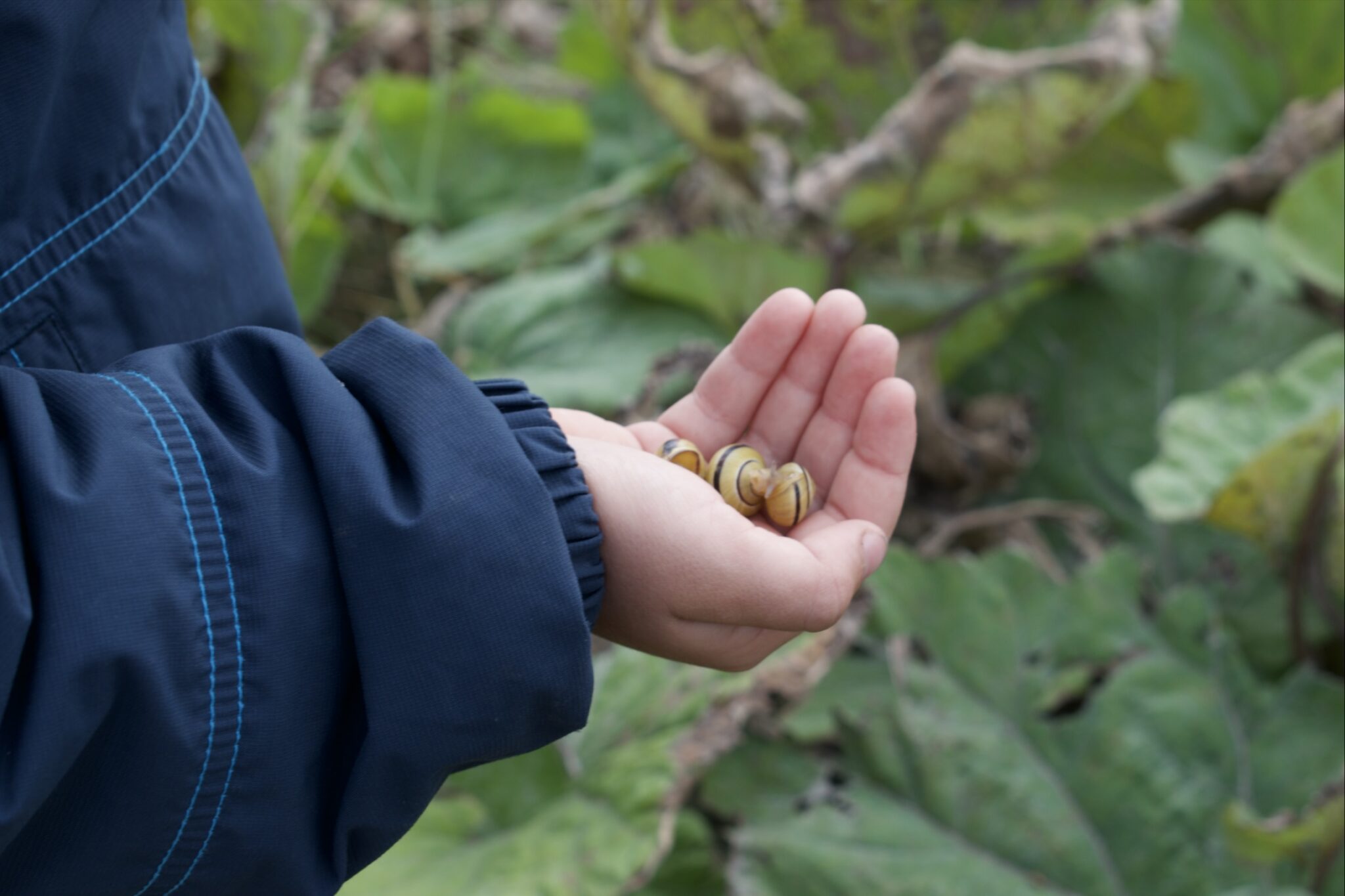
Participants collect smells along a coastal walk in mussel shells, name them in their own words, and place them together in a shared wooden archive. A practice where sensation becomes collective knowledge.
Sensory · A/r/tography · 60–90 min · Coastal
02
WALK
The Performative Walk
Slow movement through a landscape guided by silence and sensory attention. Artists create site-specific interventions along the route — a sound, an object, a gesture — that invite participants to stop, observe and reflect.
Performance · Site-specific · 2–3 hours · All landscapes
03
FOOD
Gastronomy as pedagogy
Cooking with local and seasonal ingredients over an open fire. Working with fermentation, foraging and traditional practices as a bridge between cultural heritage, sustainability and experiential learning.
Gastronomy · Tomatierra · Half day · Outdoor kitchen
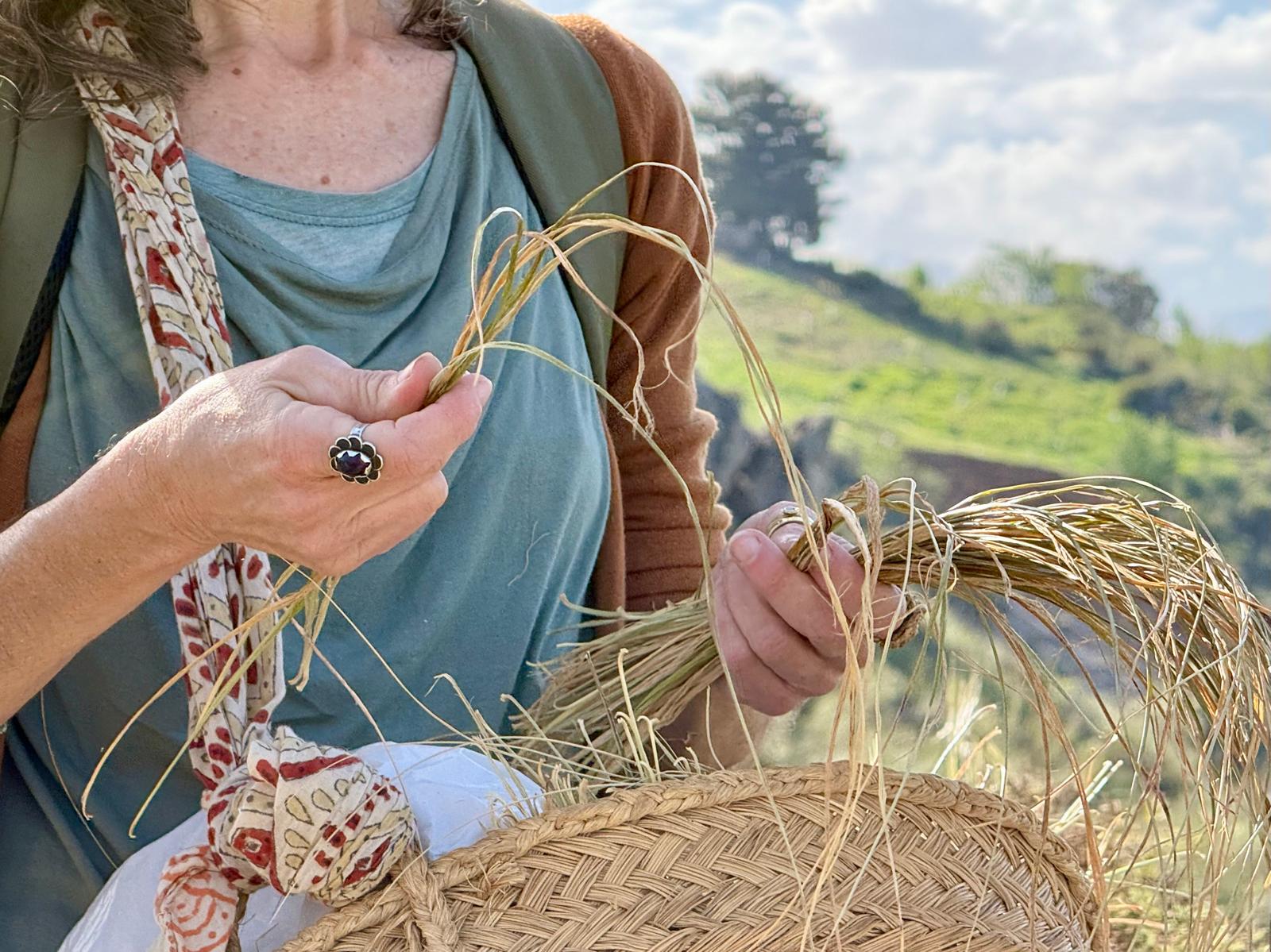
Paper made from natural materials, collected in the landscape and pressed by hand. The journal becomes a document of the walk itself — drawings, notes, pressed plants, fragments of sound written as text.
Craft · Documentation · Granada · 2026
FROM THE KITCHEN
Stjerneskud · Shooting star open sandwich
ABOUT THE PROJECT
A Danish classic — reimagined with fresh oysters from the Limfjord. The sea is already on the plate.
2 slices dark rye bread
4 fresh Limfjord oysters
2 pieces fried plaice fillet
Lemon, capers, dill
Remoulade or crème fraîche
Crispy shallots
Butter the rye generously
Layer fried plaice, then oysters
Spoon remoulade alongside
Top with capers, dill, lemon
Scatter crispy shallots last
Eat slowly. Outside if possible.
Partners
Limfjordsteatret
Regional theatre in Denmark specialising in performing arts and arts-based learning. Project lead.
Tomatierra · Cocina Salvaje
Rural initiative in Beas de Granada working with nature, gastronomy, art and sustainability.
UCN
University College of Northern Denmark — pedagogy students and educational research.
Universidad de Granada
Philosophy and anthropology students exploring human–nature relations through practice.
A headline to make a big impact on visitors
Lorem Ipsum is simply dummy text of the printing and typesetting industry. Lorem Ipsum has been the industry’s standard dummy text ever since the 1500s, when an unknown printer took a galley.